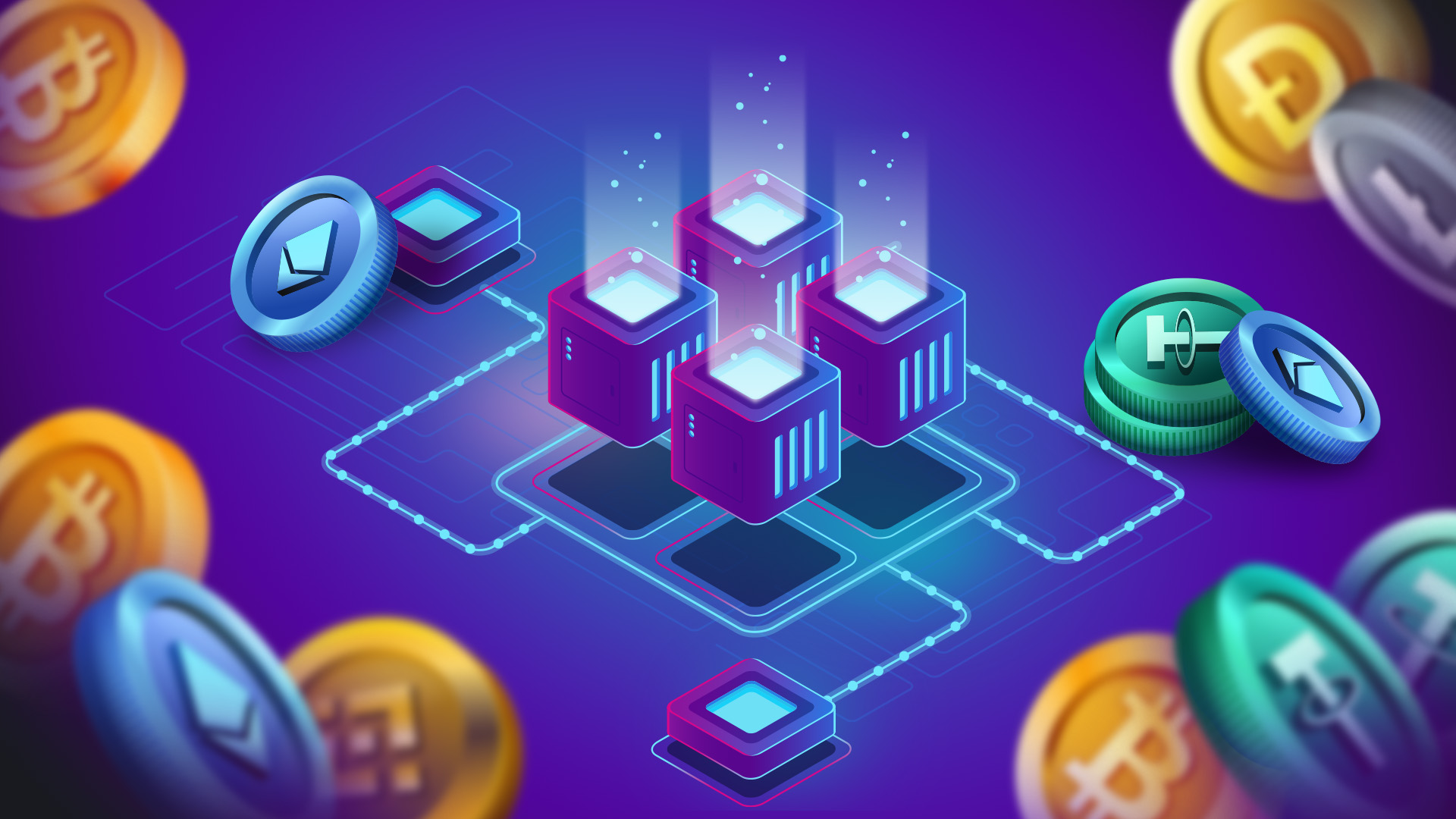

XRP is a cryptocurrency that resides on the XRP Ledger, launched in 2012. It is built to move money fast and cheaply, and is particularly efficient for borderless transaction processing. The XRP Ledger itself is an independent, decentralized and open-source blockchain ecosystem on which XRP resides. You may have also seen the company Ripple associated with the cryptocurrency; however, the XRP ledger is not owned by a single entity, and rather, Ripple builds banking software that sometimes, but not always, uses XRP to settle transactions.
What Is XRP And What Is It Actually Used For
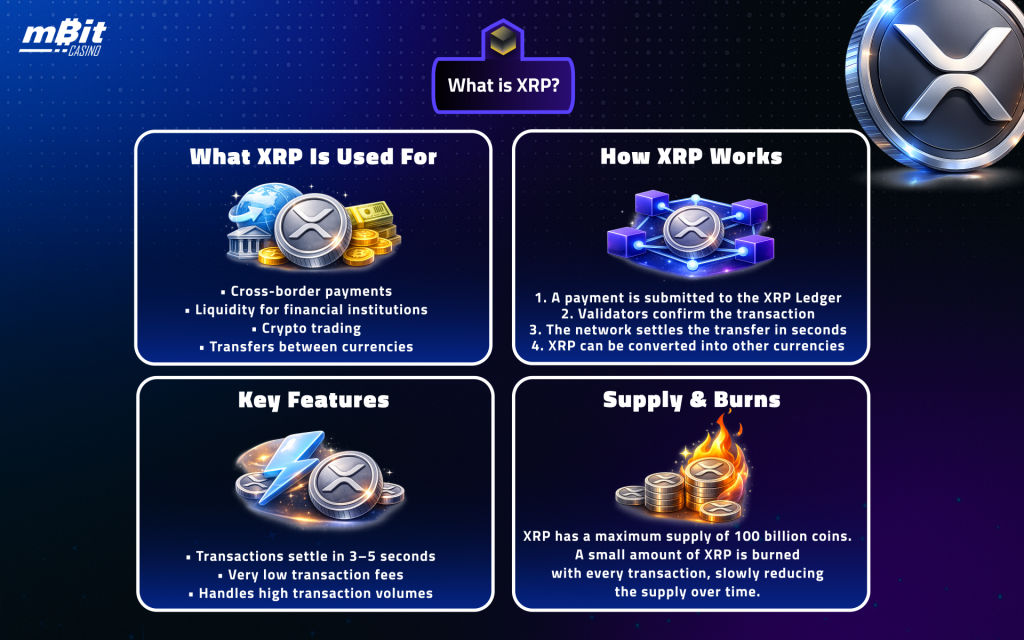
The main usage case for XRP is to bridge value between currencies and settle payments quickly. It is ideal for cross-border payments, especially when sending from one currency to a receiver that wants to receive funds in their local currency.
Here are some examples:
- Borderless payments: As with most cryptocurrencies, XRP is perfect for sending borderless transactions. It’s especially popular amongst XRP holders in different countries who want to regularly send wallet-to-wallet transfers, with transactions completed in seconds and fees minimal.
- Providing liquidity for financial institutions: Most institutions take 1 to 3 days to settle foreign currency transactions and charge fees. XRP reduces settlement times and costs by enabling the quick, cheap conversion and transfer of money. For example, in a USD-to-EUR transaction, the sender converts USD to XRP, the XRP is sent, and the receiver converts XRP to EUR on the other end.
- Crypto trading on exchanges: Not only is crypto popular amongst traders who buy and sell based on predicted price movement, but some traders who manage multiple currencies also use XRP as their base currency.
- Currency conversions to avoid pre-funded accounts: Imagine your business operates across multiple countries. Before crypto, you would need to hold local currency in bank accounts in each country for instant access to funds. With XRP, that is no longer the case, as companies can use XRP to quickly convert to local currency across fiat and digital currencies.
How an XRP Transaction Works
Each XRP transaction uses the Ripple Protocol Consensus Algorithm (RPCA) rather than mining. It’s a simple process with four steps.
- Step 1 (Initiating a transaction): The transaction request is submitted to the XRP Ledger
- Step 2 (Validation): Validators confirm the transaction through consensus
- Step 3 (Settlement): The transaction is settled on the XRP ecosystem
- Step 4 (Fund Received): Funds become available to the receiver.
As a result of these four steps, you can see that the XRP Ledger uses independent validators to agree on which transactions are valid. Once a supermajority agrees, the ledger closes the transaction and stores it as an immutable record. These validators participate in consensus rounds, which take seconds to complete as opposed to blocks on the Bitcoin ecosystem that run every 10 minutes.
Key Features of XRP
The defining features of XRP are its fast transaction speeds and low-cost fees. If you use XRP, you can expect transaction settlement to take seconds, and you’ll barely notice the fees.
Why XRP Settles in 3 to 5 Seconds
The XRP Ledger doesn’t use miners to validate a transaction. Instead, it uses the RPCA model where validators take just 3 to 5 seconds to close the ledger, i.e., settle the transaction.
Now you might be thinking Ethereum’s 12-second block time is close to this, so what’s the difference? The key difference is that Ethereum’s Proof of Stake system still needs finality, which takes 12 to 15 minutes.
Why XRP Fees Are So Low
XRP transactions are low because it uses validators. As a result, there are no miners to pay; i.e., validators don’t take fees, whereas miners do. Also, the system burns any fees being permanently removed from the total XRP supply, so no one actually receives these fees.
Thanks to this setup, the ecosystem typically uses a 10-drop fee of 0.00001 XRP; hence, you’ll barely notice the fees when using XRP. The fees rarely rise, although the system does have a failsafe to increase fees slightly in case the network is being flooded, but once again, they are so low that you won’t notice them.
Supply & Burns
There are 100 billion XRP tokens, which have been part of the ecosystem since its launch. As per the fee structure, the blockchain burns a small amount of XRP with every transaction. The burn rate is not as heavy as Binance Coin (BNB) or Shiba Inu (SHIB); instead, it’s a slow burn. You could say that the more the XRP network is used, the faster tokens burn and the supply shrinks, but in reality, the number of tokens burnt barely affects supply.
How XRP Burning Actually Works
Every time there’s an XRP transaction, it burns the fee amount in the form of XRP. Therefore, if the fee is 0.00001 XRP, then that’s the amount of XRP burned, which in the grand scheme of things has a negligible impact on supply.
With that said, there is a tiny deflationary effect. Through the accumulation of millions of transactions already processed, the sum of XRP burned is already into the tens of millions, but compared to XRP’s huge number of tokens in circulation, the amount burned still represents only a tiny fraction of the original supply.
So why burn if there is no meaningful impact? The idea isn’t to increase price or to use a deflationary crypto; instead, it is a spam deterrent, and by design, the side effect is that it slowly shrinks supply.
The 100 Billion Supply Cap
The 100 billion XRP supply cap is the maximum, and so there will be no new tokens added to the XRP ledger. When the ledger launched,100 billion tokens were created, with no system in place to mine or mint new tokens, which, if you think about it, makes sense because validators do not earn fees or rewards.
If you compare XRP’s system to Bitcoin, miners mine and mint new BTC and earn rewards for doing so. This is because BTC has a maximum supply of 21 million, but when it launched, only 0 BTC existed. For Ethereum, there is no fixed supply as Issuance is governed by protocol rules (staking rewards), while burns (EIP-1559) depend on network usage.
Therefore, we can call XRP’s supply curve a flat ceiling of 100 billion, while the circulating supply is slowly decreasing through burns.
XRP vs Bitcoin
XRP and Bitcoin are two very different cryptocurrencies. Their original concepts solve different problems. In fact, they are so different, we can’t exactly call them competitors.
Bitcoin was the first cryptocurrency created in response to distrust in the banking system following the 2008 financial crisis. The concept of a decentralized form of digital money was revolutionary, but as the first of its kind, it wasn’t built for scalability. Compared to today’s more modern cryptocurrencies, like XRP, Bitcoin is slow. It’s now more of a store of value and is nicknamed ‘digital gold’ by some investors, who see it as a hedge against inflation.
The issue with Bitcoin is that it operates in a slow-moving ecosystem with transactions taking 5 to 20 minutes to complete. Costs aren’t a huge issue, but compared to XRP, BTC fees are considerably high.
XRP is effectively a payment rail that is fast, cheap, and, through real-world usage, it is ideal for moving in and out of fiat currencies for cross-border transactions. However, it’s not known as a crypto used as a store of value. Therefore, if you are looking for a long-term investment, Bitcoin is your best bet. However, if you are moving money and want to do it quickly with minimal fees, then XRP is the better option.
Common Misunderstandings About XRP
The most common misconception is that Ripple controls the XRP Ledger. You may see some articles or social media posts, such as on Reddit, where people refer to XRP as Ripple. In fact, Ripple is a separate company. That said, it’s easy to see why people get this point wrong because Ripple has some influence over validators and owns a large amount of XRP tokens, but the fact is, the ledger has no owner and XRP and Ripple are two different things altogether.
The correct way of looking at it is that XRP is an independent blockchain ecosystem. Ripple does not own the ledger any more than the Swiss non-profit company, Ethereum Foundation, owns Ethereum.
Another misconception is that XRP is a deflationary asset, assuming there will eventually be a supply squeeze; however, the token burn rate doesn’t support this theory on any realistic near-term timeline.
Who Actually Uses XRP
XRP is mostly used by a mix of payment providers, crypto traders and retail holders. We’ve mentioned RippleNet as one of the systems Ripple designed. The company also has a system called On-Demand Liquidity, which is popular because it uses XRP as a bridge currency for cross-border corporate payments. It is also used in some retail situations and also for online casino and sports betting, although XRP is not as widely used as BTC, ETH and Tether in this niche.
Crypto exchanges use it as a fast, cheap way to move value between wallets and trading pairs. And a large share of XRP activity is simply people trading it as a speculative asset.
That mix matters when you’re trying to value XRP. Demand isn’t only about institutional payment volume; it’s also driven by speculation, just like most large cryptocurrencies.
What to Take Away
The key takeaway is that XRP is one of the fastest and cheapest cryptocurrencies available. You can transact using wallet-to-wallet transfers, make online payments, or process borderless payments in seconds, and you’ll barely notice the fees. It’s also worth making the separation between XRP, which is a cryptocurrency, XRP Ledger, which is the blockchain ecosystem and Ripple, which is a company that builds products that have the option to use the XRP Ledger. Ripple does not own or manage the blockchain XRP resides on and, as such, the term ‘Ripple blockchain’ is incorrect.
Frequently Asked Questions
Is XRP the same thing as Ripple?
No. Ripple is a private company that builds payment software. XRP is the digital asset on the XRP Ledger, an independent open-source blockchain. Some Ripple software products use XRP, but the company does not control the ledger.
How long does an XRP transaction take?
It takes only 3 to 5 seconds for the XRP Ledger to settle a transaction.
How much does it cost to send XRP?
The standard fee is 10 drops, or 0.00001 XRP, which is fractions of a cent. Fees only rise temporarily if the network is under unusual load, then drop back.
Where do XRP transaction fees go?
Fees get burned in the form of XRP tokens. Therefore, they don’t go anywhere and are permanently destroyed (burned), which is why XRP’s total supply slowly shrinks over time.
Can you mine XRP?
No. The system doesn’t support minting or mining simply because all XRP tokens were created when the blockchain ecosystem launched. As a result, no new XRP will be added.
What does XRP actually do that Bitcoin doesn’t?
XRP settles in seconds for fractions of a cent. It is also built specifically as a bridge currency between fiat pairs.
Do banks really use XRP?
Some payment providers use Ripple’s On-Demand Liquidity service, which uses XRP to bridge currencies. However, most banks use Ripple’s messaging software but don’t use XRP tokens.
Is XRP decentralized?
Yes, XRP is a decentralized blockchain exosystem. The ledger uses validators that are spread across the globe, and they are not controlled by any single entity. The caveat is that Ripple holds such a large amount of XRP in escrow, and even though the company’s holdings do not affect validators, some critics argue that this gives the company influence over the market, which defeats the idea of a decentralized cryptocurrency.
Can I send any currency over the XRP Ledger?
Yes. The XRP Ledger supports issued tokens that represent fiat currencies as well as commodities. If both the sender and the receiver trust the asset, it can be sent directly via the ledger.