

Retro game easter eggs are deliberately hidden surprises placed in old games by their developers – a credit, a joke, a secret level, or, in one famous case, the severed head of the lead designer. The best ones became urban legends, schoolyard rumors, and the foundation of internet conspiracy theories that ran for decades.
Long before achievement notifications and side quests became standard, developers were smuggling these into classic game cartridges and floppy disks, often without telling anyone, and sometimes against their bosses’ wishes. Here are ten of the strangest, funniest, and most influential easter eggs from gaming’s pixelated past – the ones your older cousin definitely claimed to have found, and very occasionally was telling the truth about.
What Counts as a Retro Game Easter Egg?
A retro game easter egg is intentional hidden content – a secret room, a credit, a cameo, a joke – placed in a game by its developers and discoverable only by players who go looking. They differ from glitches, which are accidental bugs, and from unlockables, which the game advertises and rewards through normal play.
1. Adventure (Atari 2600, 1980) – The One That Started It All
Atari, in 1980, did not credit its programmers. Management considered credits a recruitment risk: if you knew who made the hit games, rival companies could poach you. Warren Robinett, who built Adventure essentially alone, was not thrilled about this. So he hid his signature in the game.
To find it, you had to pick up an invisible one-pixel ‘dot’ tucked into one specific room, carry it through a wall the dot could pass through, and step into a flickering chamber. There, in glowing letters: Created by Warren Robinett.
Atari only discovered it after he had already left the company. Reprogramming the ROM to remove it would have been expensive, so they kept it – and reportedly began calling such hidden features ‘easter eggs,’ because hunting for them was like an Easter egg hunt. An entire genre of game secret was born from one underpaid programmer’s spite.
2. DOOM II (1994) – John Romero’s Head on a Stick
The final boss of DOOM II is a giant horned demon skull mounted on a wall, called the Icon of Sin. Brain exposed, mouth gaping, spawning enemies – you fire rockets into its forehead until it dies. Standard apocalyptic FPS stuff.
What players didn’t realize for years: the boss’s ‘brain’ wasn’t really a brain. If you used the noclip cheat to walk through the wall and look at the model directly, you found John Romero’s actual head impaled on a wooden stake. Co-designer Sandy Petersen had recorded a reversed audio sample of Romero saying ‘to win the game, you must kill me, John Romero’ and embedded it inside the boss.
To beat DOOM II, you literally had to kill your own lead designer. The hidden audio message wasn’t deciphered until players ran it through reverse playback months after the game shipped.
3. Diablo II (2000) – The Secret Cow Level
Diablo (1996) had a persistent rumor: click a stationary cow in the village enough times and a secret cow level would unlock. It wasn’t true. Blizzard had to issue actual statements denying the cow level existed.
Ironically, players did not believe them.
By the time Diablo II launched in 2000, Blizzard had clearly given up. They added a real Secret Cow Level: a pasture filled with bipedal cow warriors wielding polearms, led by the king of all cows, The Cow King. You access it by transmuting Wirt’s Leg (looted from a corpse in Tristram) and a Tome of Town Portal in the Horadric Cube. The cows attack on sight, drop excellent loot, and moo aggressively while doing it.
The cow level became canon. It returned in Diablo III. It is referenced in Diablo IV. A single denied rumor accidentally created one of gaming’s most enduring inside jokes – and a community-built cow mythology.
4. Star Fox (SNES, 1993) – Out of This Dimension
Star Fox on the SNES had multiple difficulty paths. The hardest route sent you through an asteroid field where, if you flew into a specific black hole, you’d be warped into a level called ‘Out of This Dimension.’
It is one of the strangest things Nintendo has ever shipped.
The level takes place in a void filled with bizarre geometric shapes, floating cards, and giant slot machines you have to shoot. The boss is a flying slot machine. Beating it requires you to literally get three of a kind by shooting its spinning reels at the right moment. After winning, the game tells you there’s no way home, plays a brief cutscene, and dumps you back to the title screen.
You don’t unlock anything. You don’t get an ending. You just spend ten minutes fighting a slot machine in space, and then it’s over.
5. Sonic the Hedgehog 2 (1992) – Hidden Palace Zone
Sonic the Hedgehog 2’s instruction manual hinted at a level called Hidden Palace Zone. The game shipped without it. Players combed every cartridge for years, swapping rumors and conspiracy theories about how to access the missing zone.
Then, in the late 1990s, ROM hackers cracked the cartridge data and found it: Hidden Palace Zone existed, half-finished, sitting in the ROM with no proper exit or boss. It had been cut late in development, reportedly to fit cartridge size limits. The artwork was complete. The music was complete. It just had nowhere to go.
Sega eventually built a polished version of the level into the 2013 mobile remaster, finally letting Hidden Palace Zone exist as a real, completable stage. The original cartridge version is still there too, frozen mid-development, like a half-painted room someone walked away from twenty years ago.
6. Quake (1996) – Dopefish Lives
In one of Quake’s underwater levels, a small, low-poly fish swims around if you look closely. That fish is Dopefish – a character originally from Commander Keen 4: Secret of the Oracle, an id Software platformer from 1991.
Dopefish has, somehow, become the most cameoed character in gaming history.
He has appeared in Max Payne, Anachronox, Battlefield 2142, Tony Hawk’s Underground 2, Daikatana, Bionic Commando Rearmed, and dozens of others – most created by people who had nothing to do with the original Keen games. The graffiti ‘Dopefish Lives’ has been spotted in over thirty separate titles. There’s a fan website tracking sightings. No one ever planned this. A dumb-looking fish from a forgotten DOS platformer just kept showing up, and a generation of developers refused to let him die.
7. Mortal Kombat (1992) – Fight Reptile
On Mortal Kombat’s Pit stage, occasionally a small dark silhouette would streak across the moon in the background. It was almost imperceptible – easy to miss between rounds. Players passed it around schools and arcades as a rumor for months.
The truth, when someone finally cracked it: if the silhouette appeared during a match on The Pit, and you won by Double Flawless Victory (no health lost across both rounds) and finished with a Fatality, the game would unlock a secret fight against Reptile – a green-palette-swapped ninja moving at double speed, with the combined moves of Scorpion and Sub-Zero.
He hit hard. He moved faster than seemed legal. He could appear and vanish.
This was 1992. No internet, no GameFAQs. Reptile spread entirely through word-of-mouth and grainy magazine screenshots until enough players pulled the conditions off to confirm he was actually real.
8. Wolfenstein 3D (1992) – The Pac-Man Maze
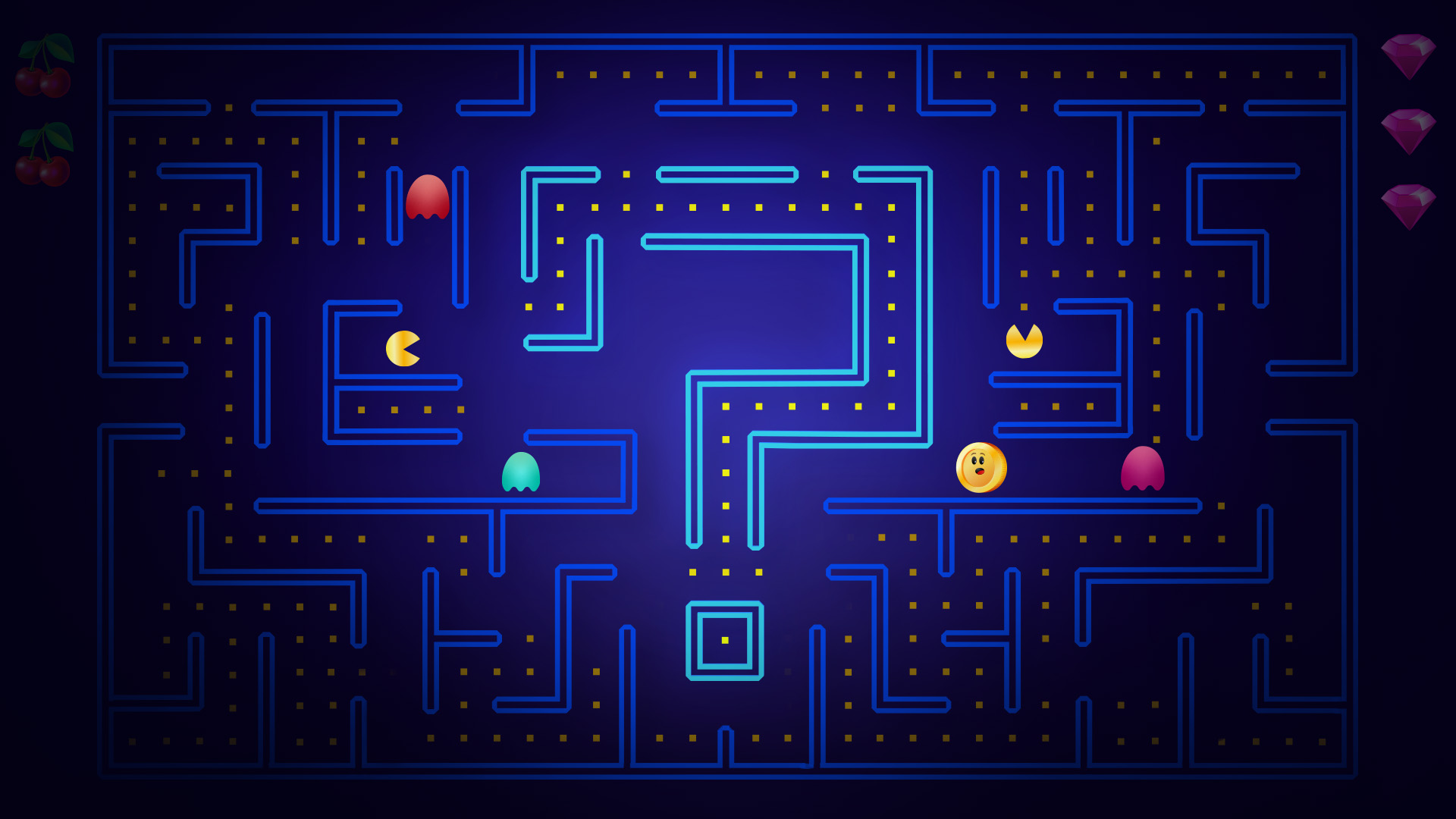
Hidden behind a secret wall in Wolfenstein 3D’s Episode 3 is a level called ‘Pac-Man Maze.’ It is exactly what it sounds like: the classic Pac-Man maze layout, rebuilt in first-person as a 3D corridor maze, with the dots replaced by ammo pickups.
Patrolling the maze are four ghosts – Blinky, Pinky, Inky, and Clyde – re-skinned as Nazi soldiers chasing you through the tunnels.
Id Software did not get permission from Namco for any of this. They just shipped it. Apparently, Namco either didn’t notice or didn’t consider a Nazi-killing shooter worth pursuing legally, because the level remained in the game without modification. It is one of the most flagrant unauthorized cameos in PC gaming history – a copyrighted maze, with copyrighted characters, sitting in a copyrighted FPS, untouched for over thirty years.
9. Metal Gear Solid (1998) – Psycho Mantis Reads Your Mind
Psycho Mantis, the telepath boss in Metal Gear Solid, broke the fourth wall harder than any video game character before him. He told you, the player, to put your controller on the ground – and then made it rumble using the DualShock’s vibration motor, claiming psychic power.
He also read your PlayStation memory card. If you had Castlevania: Symphony of the Night saved, he commented on it. If you had Suikoden saves, he praised your taste. If your save count was high, he called you out for playing too much.
The fight itself was unwinnable through normal play. Mantis read your controller inputs and dodged everything you threw at him. The actual solution: pause the game, unplug your controller from Port 1, and plug it into Port 2. Suddenly, he could no longer read you.
Hideo Kojima built an entire boss fight that required you to physically modify your console setup to beat it.
10. Maniac Mansion (1987) – Microwave the Hamster
Maniac Mansion was a point-and-click adventure where you control three teenagers exploring a haunted mansion. Among the items you could find: a small hamster, sitting in a cage in one of the bedrooms.
- The mansion also had a microwave.
- You could put one in the other.
There was a unique cutscene for it, complete with sound effects and dialogue from the mansion’s owner discovering what you had done. The NES version got the entire sequence censored before re-release; Nintendo’s content guidelines at the time did not permit microwaving small pets, even fictional ones. The original DOS version remained intact.
It is not the most charming easter egg on this list. But for 1987, it was a bizarrely committed piece of gallows comedy buried inside what looked, on the surface, like a kids’ adventure game.
Frequently Asked Questions About Classic Video Game Easter Eggs
What was the first-ever video game easter egg?
Warren Robinett’s hidden credit in Adventure (1980) is widely considered the first intentional easter egg, though debate continues over earlier candidates, such as a hidden message in Starship 1 (1977).
Why are they called ‘easter eggs’ in games?
Atari coined the term to describe Adventure’s hidden room, comparing the hunt for hidden content to an Easter egg hunt. The name stuck across the entire industry.
What’s the difference between an easter egg and a glitch?
Easter eggs are intentionally hidden content placed by developers. Glitches are unintentional bugs. Pokémon’s Missingno, for instance, is a glitch – not an easter egg, despite its fame.
Are easter eggs still added to modern games?
Yes. Modern games like Elden Ring, Baldur’s Gate 3, and Cyberpunk 2077 all contain hidden references, secret rooms, and developer jokes – though now they’re celebrated rather than smuggled in.
Can new easter eggs still be found in old games?
Yes. Dataminers and ROM hackers regularly uncover unreleased content in decades-old cartridges. Sonic 2’s Hidden Palace Zone was rediscovered this way, years after the game shipped.
Did developers ever get in trouble for hiding easter eggs?
Sometimes. Warren Robinett annoyed Atari with his Adventure signature. Unauthorized easter eggs in corporate software have caused firings. Most studios now tolerate them – or encourage them outright.
Why Retro Game Easter Eggs Still Matter
Retro game easter eggs are gaming’s marginalia – the doodles, jokes, signatures, and middle fingers that developers smuggled into ROMs long before social media existed to brag about them. Some became cultural icons in classic games communities. Some became urban legends that took twenty years to confirm. Some are still being found in cartridges that have been sitting in attics since the late 1980s.
What they have in common is a kind of refusal: a refusal to ship anonymous, sterile software. The people building these games wanted you to know they were there. Most of the time, you would never notice. But sometimes, decades later, someone did – and the secret got out.